SUCCESS STORY >

NREL Flatirons Campus Visitor Experience

NREL’s Flatirons Campus includes complex research facilities, renewable energy infrastructure, specialized labs, and outdoor testing sites. The challenge was to help different visitor audiences — from general public guests and policymakers to DOE leaders, researchers, industry executives, and potential partners — better understand what they were seeing, why it mattered, and how the campus supported NREL’s broader research mission.

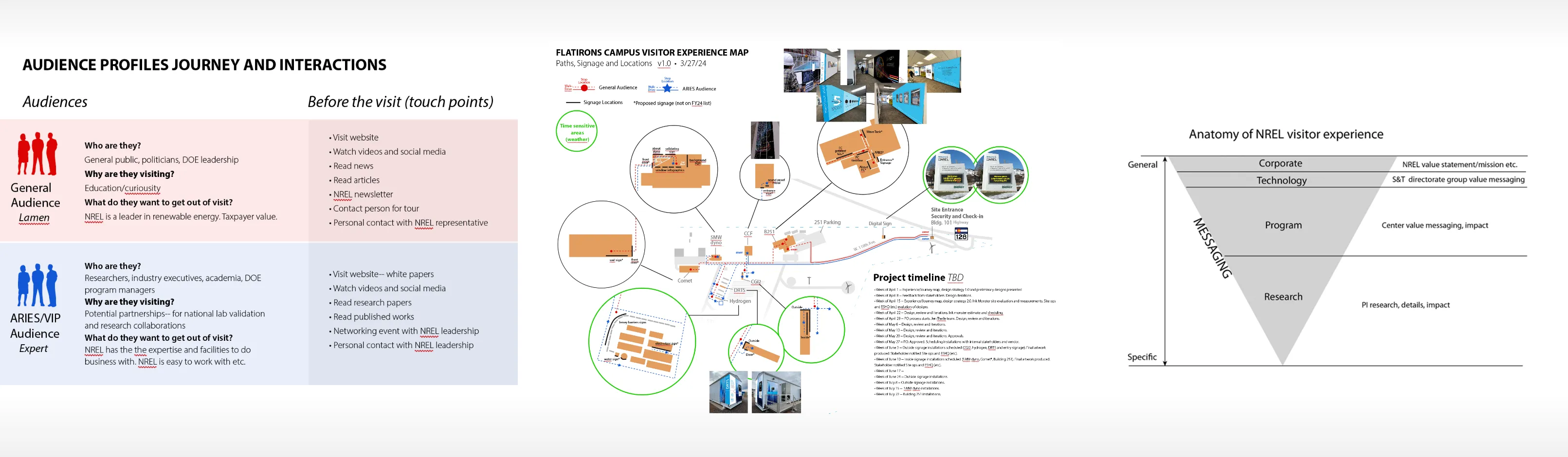
I helped develop an early visitor experience strategy that mapped tour paths, audience needs, signage opportunities, and communication touchpoints across the campus. The work included a journey map, audience profiles, signage location planning, preliminary visual concepts, and a phased implementation timeline.

CHALLENGE

  • NREL’s Flatirons Campus is a complex research environment with multiple buildings, outdoor test sites, specialized infrastructure, and visitor routes.
  • Visitors include a wide range of audiences — general public guests, policymakers, DOE leadership, researchers, industry executives, academia, and potential partners.
  • Each audience arrives with different levels of technical knowledge, different questions, and different reasons for visiting.
  • The visitor experience needed to help people understand where they were, what they were seeing, why the research mattered, and how the campus connected to NREL’s broader renewable energy mission.
  • The work needed to support both high-level public awareness and more detailed technical or partnership-oriented conversations.
  • The challenge was to connect physical navigation, audience needs, signage, storytelling, and stakeholder goals into one coherent visitor experience.

MY ROLE

  • Served as co-project manager, facilitator, and applied design research lead for the Flatirons Campus visitor experience project.
  • Helped guide the work from early discovery through journey mapping, design strategy, stakeholder review, preliminary concepts, vendor coordination, and implementation planning.
  • Shadowed existing tours to observe how visitors moved through the campus, where context was missing, and which moments created confusion, curiosity, or opportunity.
  • Interviewed key stakeholders and tour guides to understand visitor questions, recurring pain points, operational constraints, audience needs, and communication goals.
  • Synthesized observations and stakeholder input into audience profiles, visitor paths, signage opportunities, journey maps, and preliminary design recommendations.
  • Facilitated working conversations with internal stakeholders to align around visitor needs, storytelling priorities, signage locations, safety requirements, and practical implementation constraints.
  • Coordinated with vendors and internal teams around complicated outdoor installation conditions, site access, weather exposure, operational constraints, and safety requirements.
  • Helped translate a signage request into a broader visitor communication system that connected physical navigation, science storytelling, audience depth, and partnership conversations.
  • Methods used: tour shadowing, stakeholder interviews, audience profiling, journey mapping, signage strategy, preliminary visual concepts, vendor coordination.

SOLUTION

  • Created a visitor experience framework that connected audience needs, tour routes, signage locations, and key communication moments across the Flatirons Campus.
  • Organized the experience around two primary audience modes: general visitors needing high-level orientation and ARIES/VIP audiences needing more technical, partnership-oriented information.
  • Mapped before, during, and after-visit touchpoints to show how visitors could first learn about the campus, experience the research onsite, and continue engaging after the tour.
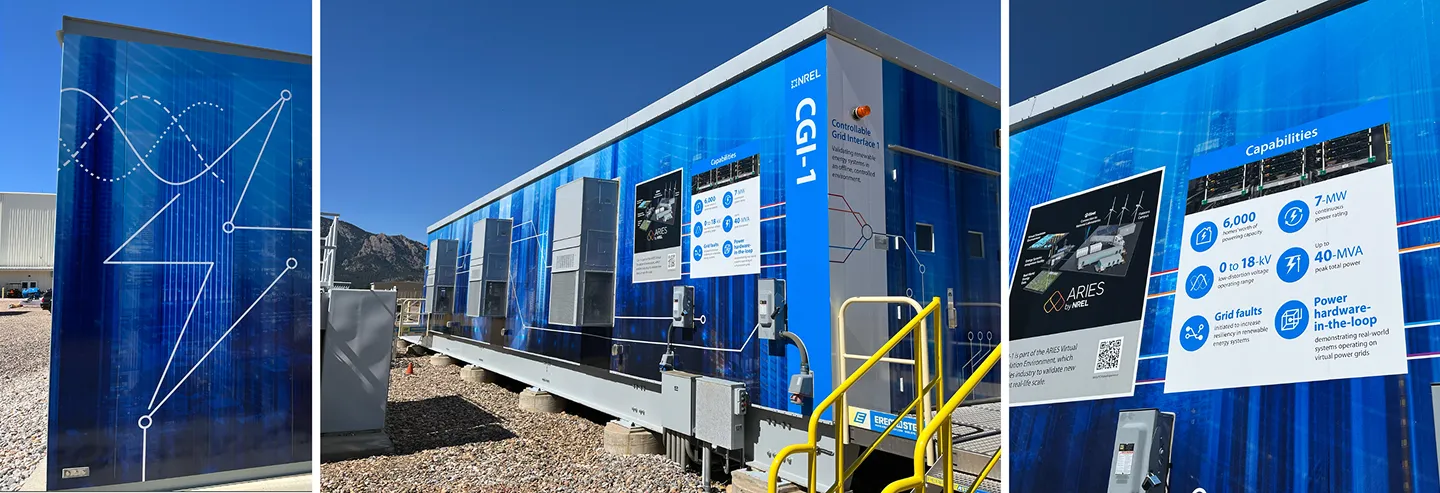
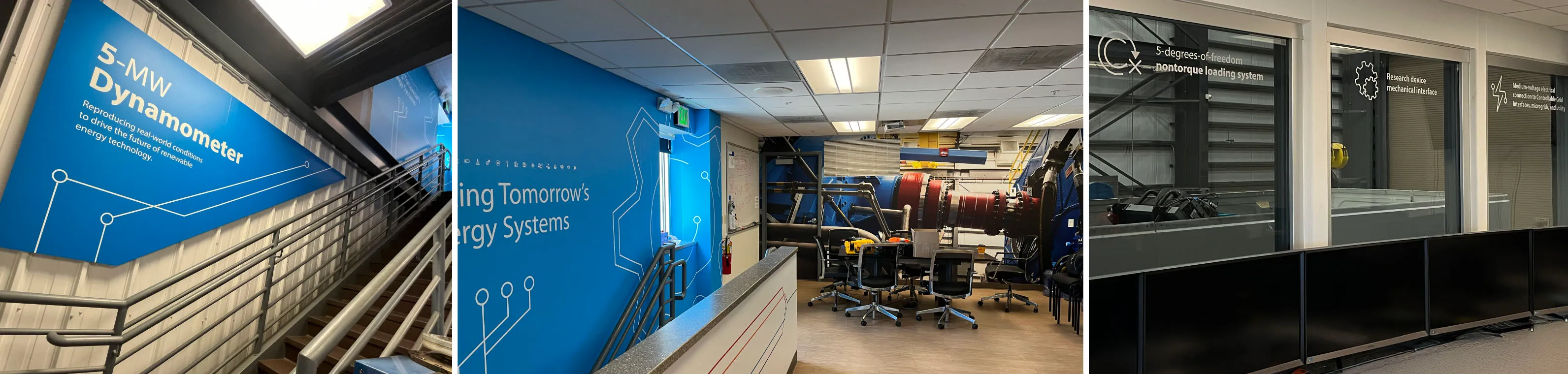
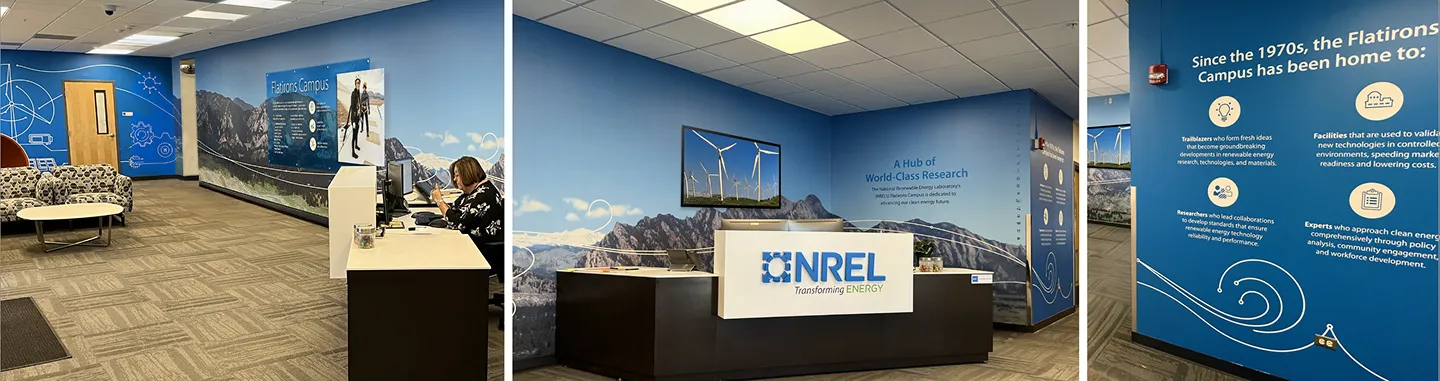
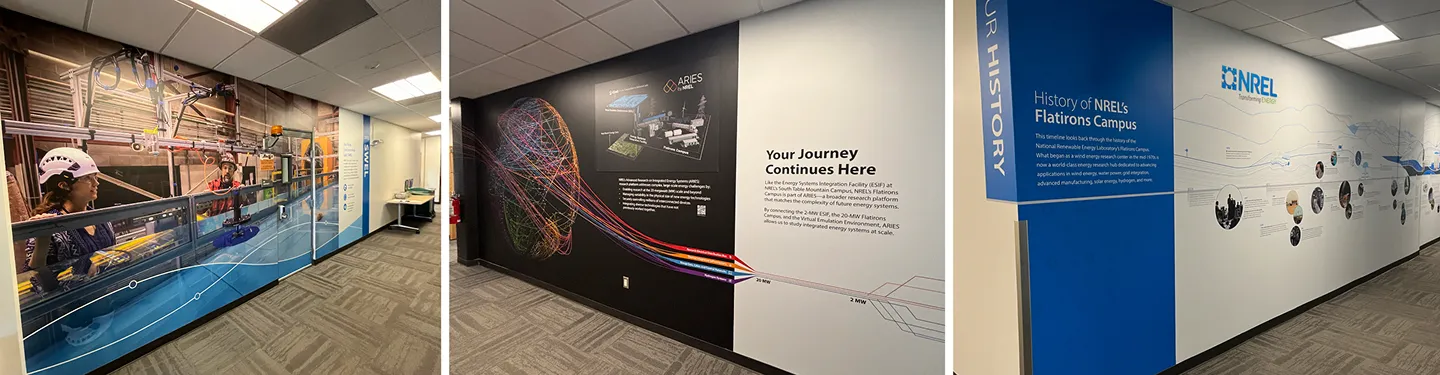
  • Defined opportunities for environmental graphics, welcome signage, facility identifiers, wall displays, diagrams, QR-code learning moments, and timeline-based storytelling.
  • Developed a phased implementation plan to support stakeholder review, design iteration, site evaluation, approvals, production, and installation.
  • Created preliminary visual samples to help stakeholders evaluate how signage and environmental graphics could make complex research facilities more understandable, memorable, and connected to NREL’s mission.

IMPACT

  • Helped shift the Flatirons Campus visitor experience from a collection of technical tour stops into a more intentional communication journey.
  • Created a clearer framework for connecting audience needs, tour routes, signage opportunities, and before/during/after touchpoints.
  • Helped stakeholders tailor messaging for different audiences, including general visitors, policymakers, DOE leadership, researchers, industry executives, academia, and potential partners
  • Supported a more flexible visitor experience that could provide high-level public awareness for some audiences and deeper technical or partnership-oriented information for others.
  • Helped make complex renewable energy research infrastructure more understandable, memorable, and connected to NREL’s broader mission.
  • Demonstrated how applied design research, journey mapping, stakeholder facilitation, and environmental communication design can support science communication in a physical visitor experience.

"John is highly competent and takes pressure off of the rest of an organization with his ability to handle multiple tasks with a deft touch…excels at project management—keeping complex timelines on track, aligning teams, and ensuring no detail falls through the cracks…fantastic at coordinating with vendors, from printers to fabricators, communicating clearly and anticipating needs so that production runs smoothly."
–Kathleen Morton, NREL