SUCCESS STORY >

NREL VISITOR EXPERIENCE

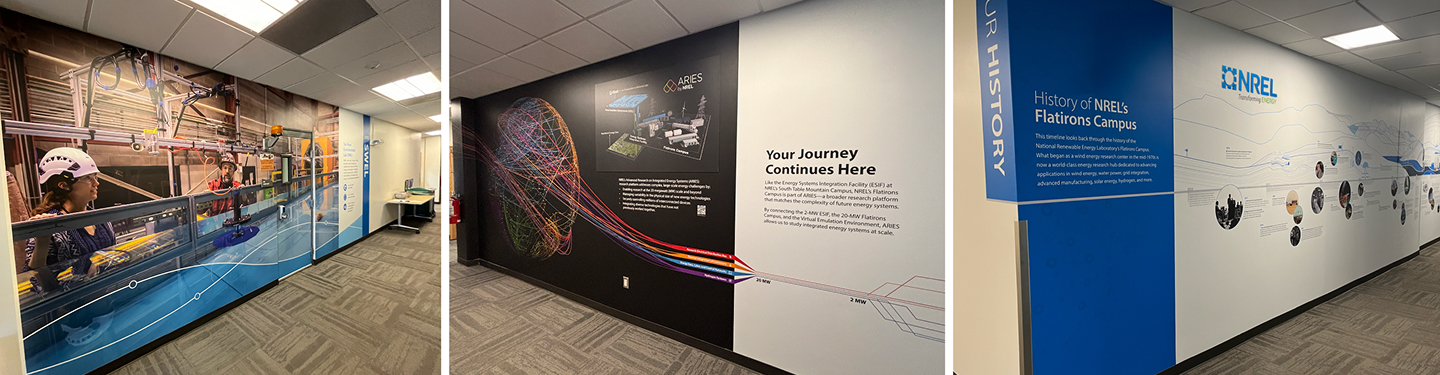
The National Renewable Energy Laboratory (NREL) introduces guests to the lab’s groundbreaking renewable energy research through engaging, interactive, and educational exhibits. Designed to showcase innovation, sustainability, and impact, the experience combines clear visuals, compelling storytelling, and hands-on elements to make complex energy concepts accessible and memorable for diverse audiences.


CHALLENGE

  • Outdated displays, inconsistent messaging, and unclear visitor flow.
  • Stakeholders across communications, facilities, and education had differing priorities.
  • Tight timeline and budget required seamless collaboration between internal teams and external vendors.

SOLUTION

  • Experience Design: Defined visitor journey, flow, and interactive storytelling aligned with NREL’s brand and sustainability ethos.
  • Facilitation: Unified input from scientists, leadership, and educators to clarify storytelling goals.
  • Creative Execution: Defined visitor journey, flow, and interactive storytelling aligned with NREL’s brand and sustainability ethos.
  • Project Management: Led full process from strategy and stakeholder workshops to installation and launch.
  • Vendor Coordination: Managed designers, fabricators, media producers, and installers for cohesive execution.

IMPACT

  • Delivered an immersive, cohesive visitor experience showcasing NREL’s innovation and impact.
  • Simplified complex research, boosting visitor engagement and comprehension.
  • Strengthened internal alignment and institutional pride.

WHY DO I NEED A DESIGNER WHEN I CAN USE AI?

  • Even though AI can generate designs, you still need a human designer because AI doesn’t understand your users, your brand, or your goals the way a human does.
  • AI is a tool—it can create options, but it can’t:Interpret your audience’s emotions and needs or make strategic decisions that align design with business objectives.
  • Insure quality, cohesion, and originality instead of random outputs.
  • Consider ethics, accessibility, and inclusivity.Integrate designs into real-world contexts and systems effectively.
  • Bottom line: AI speeds things up, but a designer is the guide, curator, and strategist who turns AI outputs into designs that actually work for your business and your audience.
"Companies that integrate human-centered design with AI see a 32% higher revenue growth and 56% greater customer satisfaction compared to those that don’t.”
— Deloitte, 2023 Human-Centered AI Report

"John is highly competent and takes pressure off of the rest of an organization with his ability to handle multiple tasks with a deft touch…excels at project management—keeping complex timelines on track, aligning teams, and ensuring no detail falls through the cracks…fantastic at coordinating with vendors, from printers to fabricators, communicating clearly and anticipating needs so that production runs smoothly.”"
–Kathleen, Morton, NREL